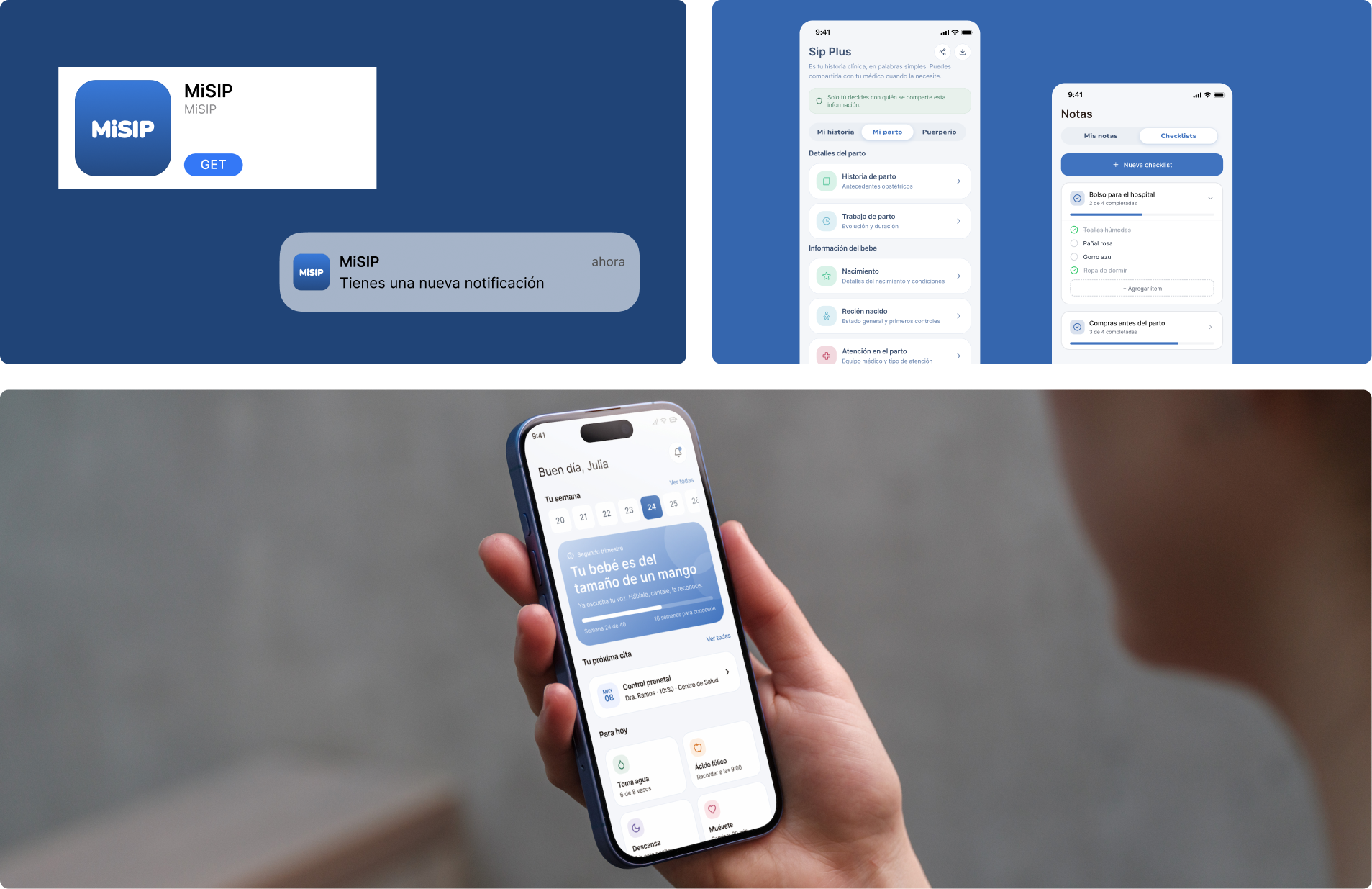
PAHO asked me to digitise a pregnancy card. I pushed back on the scope and turned two weeks into five months.
PAHO is the Pan American Health Organization, the World Health Organization's regional office for the Americas. They use a perinatal card to track pregnancy across Latin America. Written by clinicians, for clinicians. The brief: turn the PDF into an app. They estimated two weeks. But the women carrying that card weren't clinicians. That gap turned two weeks into five months.
A card you only open at the doctor has no reason to live on a phone. I built hi-fi prototypes PAHO's clinicians could tap through. Once they saw it working, the question shifted from "can we digitise this?" to "what else should this do?"
A digital version of the physical card. One screen, two weeks. The brief stopped there.
The card, rewritten and redesigned. Wrapped in the four things she opened a pregnancy app for anyway. PAHO agreed.
14 mothers, 5 doctors. Remote interviews, plus a competitive benchmark of the pregnancy apps already on her phone. She wasn't missing a digital form. She was missing one place that held everything, in language she could read without a doctor beside her. Before handoff, I ran a second round with the same 14 mothers. That's where the 3x comprehension lift came from.
33 sections, rewritten field by field with PAHO's medical partners. Their clinicians rejected my first rewrites because I'd accidentally changed clinical meaning. So I paired with a doctor for two weeks and we rewrote every field together.
A few of the rewrites
FUM: 12/03 · EG: 32+4
You're 32 weeks and 4 days along
Paridad: G3 P2 A0
Third pregnancy · Two babies born · No losses
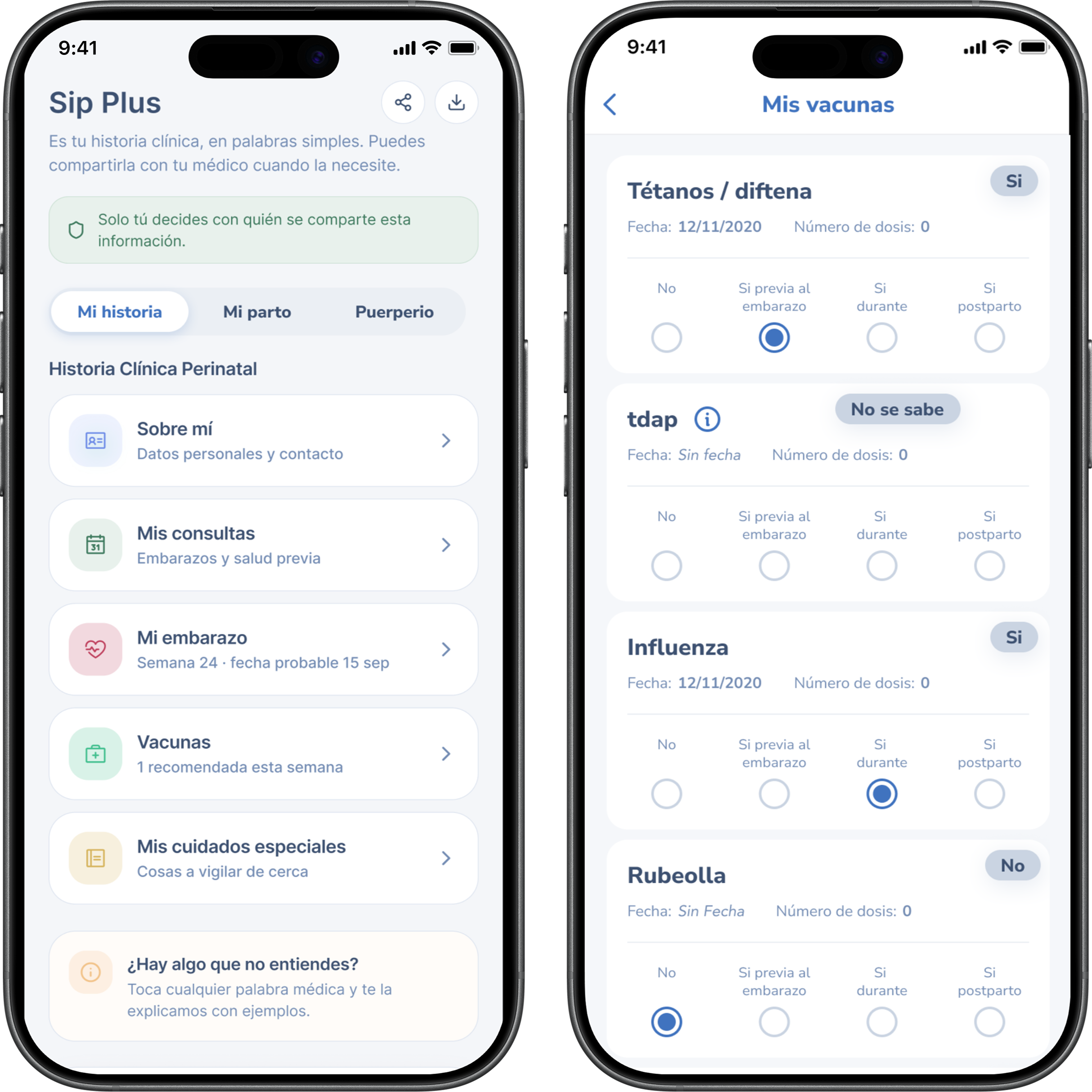
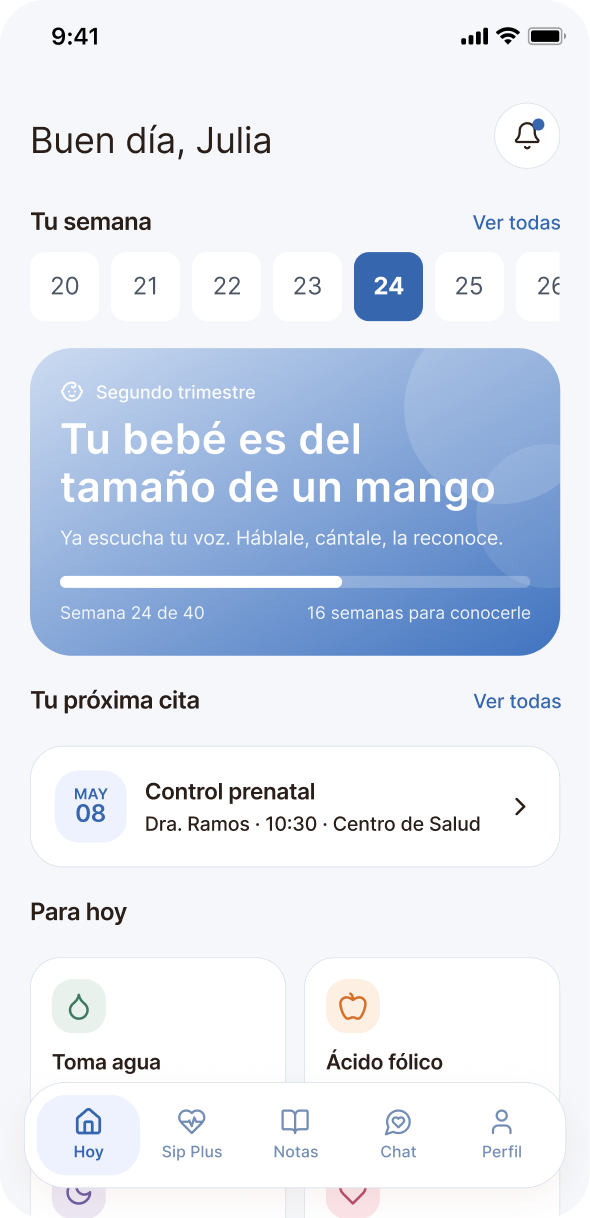
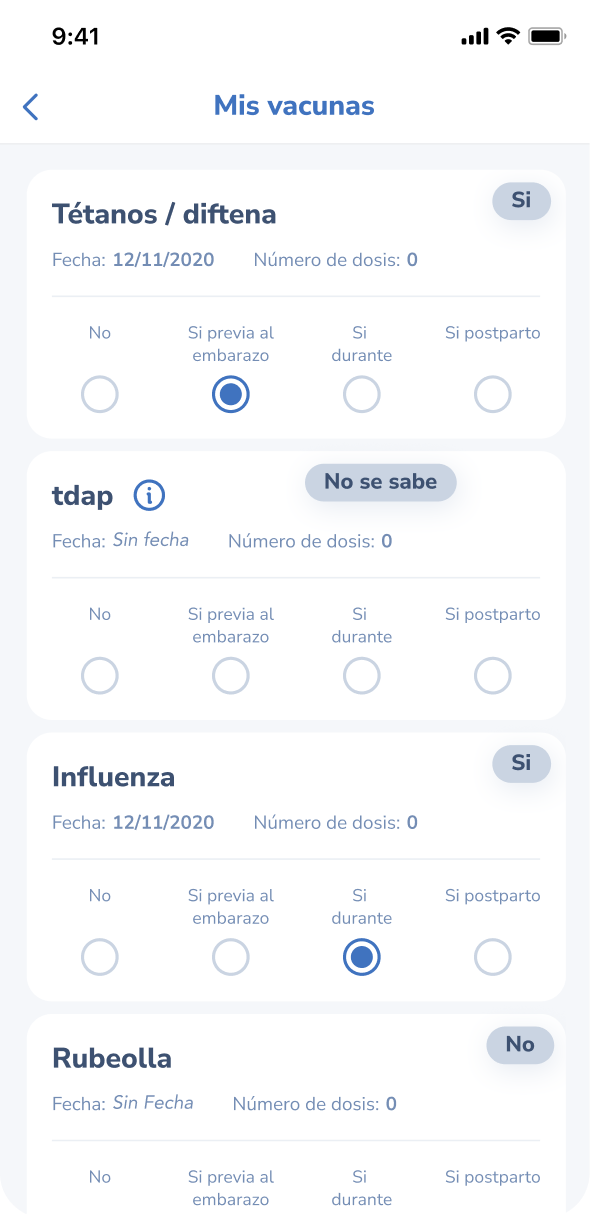
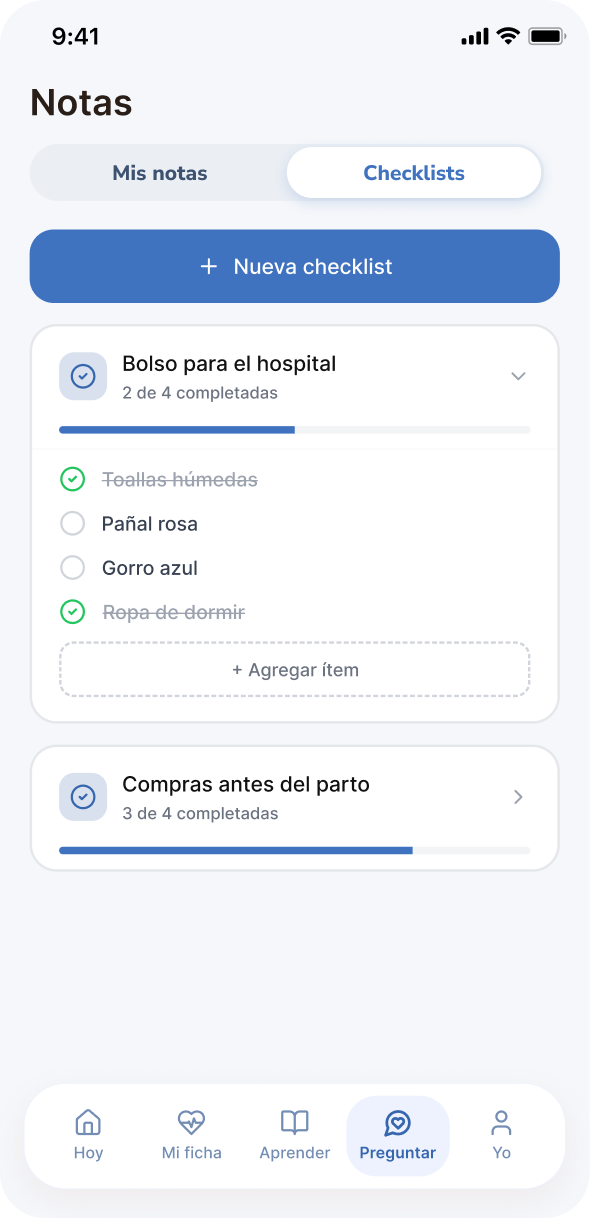
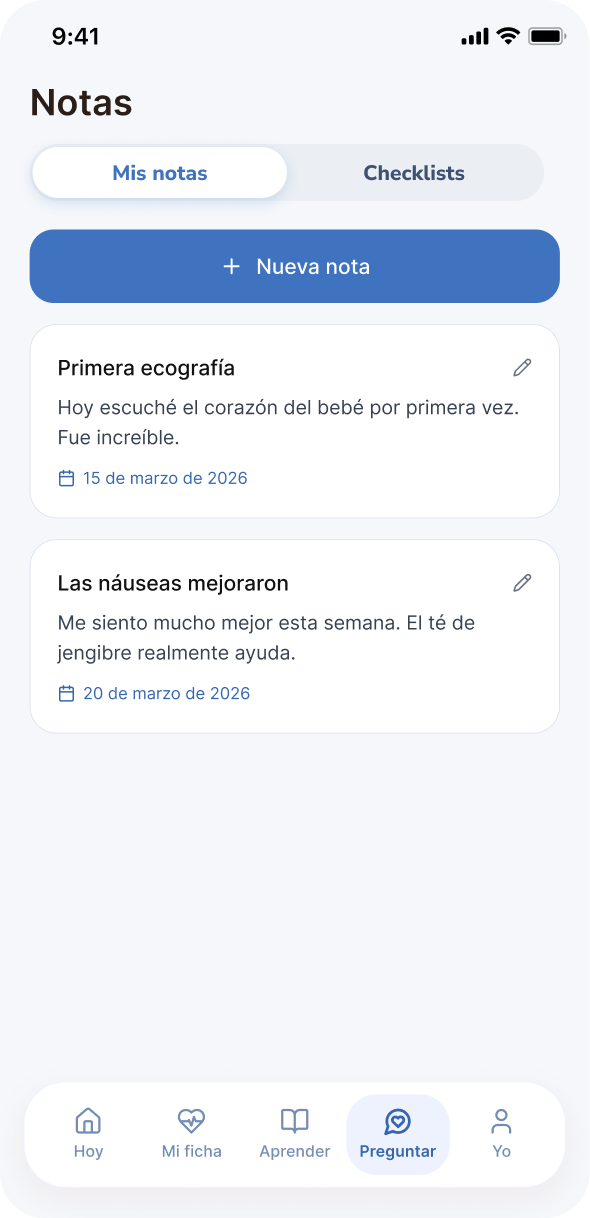
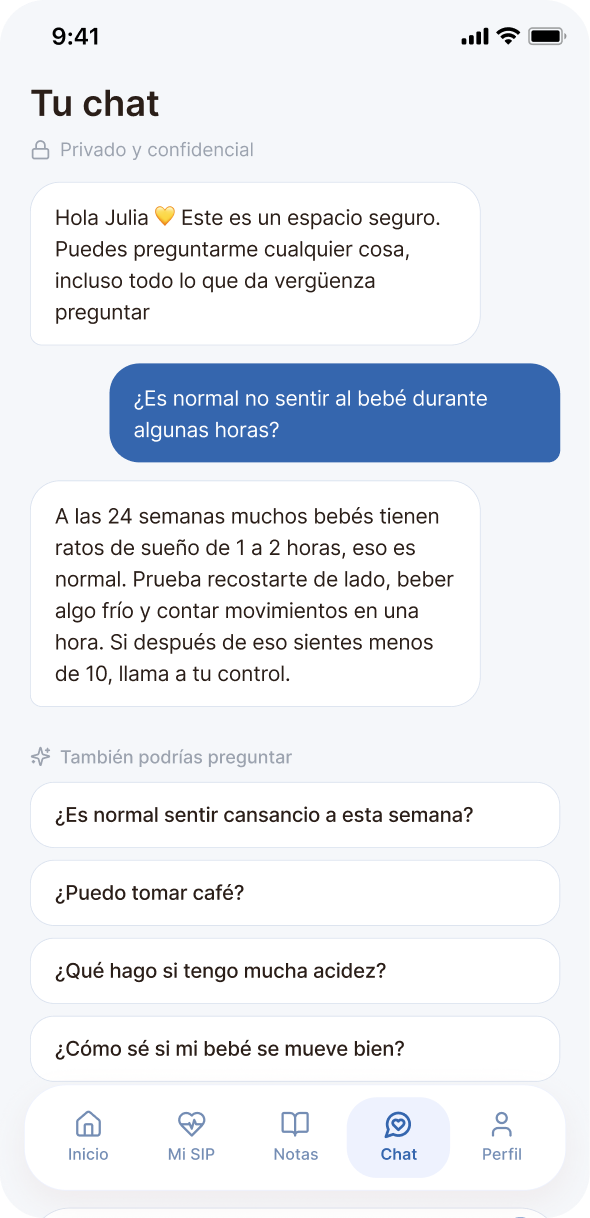
The card stayed at the center, clinically faithful. Around it, four flows built for the moments research kept surfacing: the home screen with her week and appointments, the checklist, her notes, and a direct line to her clinician. One place, her words.
Show the user, not the screen.
The first time I presented a rewrite, PAHO said no. The second time I brought the same field, but with a clip of a mother reading the original out loud and getting it wrong. They said yes. The screen didn't change. The evidence did.
She needed to understand it without a doctor beside her.
That meant rewriting 80+ clinical fields until she could read them on her own. I paired with doctors for two weeks, going field by field. Some took hours. But if she couldn't read it at home, the design didn't matter.